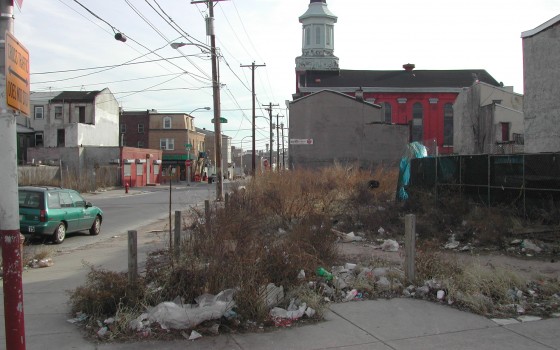
Philadelphia is a rich Mecca of
community development corporations (CDC) and community organizations, some
which have placed a great deal of effort into transforming vacant lots. One such CDC is New Kensington CDC, which was featured at this
year’s annual Flower Show. "From Blight to
Blossom" is the name of the exhibit, and its conception was the result of
a partnership between the New Kensington CDC and Philadelphia's Office of Housing and
Community Development. Its intention, according to a press release
describing the project, is to "tell the story of an urban side-yard
transformed from a vacant lot into a garden" (http://www.flyingkitemedia.com/devnews/blossom0308.aspx).
Instead of allowing blight to fester in
Philadelphia’s neighborhoods, New Kensington has viewed vacant lots and
abandoned homes as areas of potential beauty.
What can be done with vacant
lots? One potential use of such space is
to create new affordable housing sites, the foundation upon which Habitat for
Humanity has built their organization. Other
possibilities include using the spaces for parks, community gardens,
recreational centers, and even centers of community art. Some projects such as New Kensington Vacant
Land Management Program and Philadelphia Horticultural Society’s Community-Based
Vacant Land Maintenance Program have dedicated their efforts towards
cleaning and creating parks and community gardens throughout the city. While
the end result is transforming space, the Philadelphia Horticultural Society’s
project partners with nine community organizations, including Ready, Willing & Able and SELF,
Inc. to employ individuals making the transition back
to work after experiencing drug addiction and homelessness. The Mural Arts Restorative
Justice program has also helped with these efforts by employing
ex-offenders in cleaning and transforming vacant lots. The great aspect of these projects is people
are given the opportunity to transform themselves through the process of transforming
the land.

The Village
for the Arts and Humanities is another organization that has transformed a great
deal of space in North Philadelphia. On
their campus alone, they’ve transformed over 150 vacant lots into gardens,
green spaces housing collections of community art and a two acre farm. In this particular community, the Village for
the arts and Humanities has worked organically by recruiting the help of
community residents. As the Wallace
Foundation states: “With
a phantasmagoria of mosaic sculptures, murals and gardens glimmering with giant
angels and creatures no zoo has ever seen, the Village offers vibrant testimony
to the role that art can play in bringing a desolate urban landscape back to
life and engaging youth and families in the arts.” As a result, neighbors are given the opportunity
to connect and build relationships, while working together towards a common
goal. In addition, the two acre farm has
given the community access to fresh and healthy food options.
The Southwest Community Development Corporation
also
provides a community beautification project that includes a community
garden. One of the 2011 graduates from
the MA in Urban Studies, Regina Broomell-Young, assisted the Southwest
Community Garden by facilitating research investigating is it was needed in the
community: Her researched concluded that the garden was absolutely needed in
the community for both health and community organizing purposes.

While the potential for transformation is available to each of Philadelphia’s
40,000 vacant and abandoned properties, it is a large endeavor from start to
finish. Before starting, there is often
the task of acquiring land or permission from owners, which makes the process a
laborious one, especially in the cases of those lots privately owned. For those ready and able for the task, the
Philadelphia Horticultural Society has developed a guide entitled Reclaiming
Vacant Lots: A Philadelphia Green guide. This guide not own
provides practical tips on gardening and landscaping but also highlights steps
for the project from beginning to finish.
Steps include:
- Resolving Ownership Issues
- Mapping Community Resources
- Assessing Site Conditions
- Developing a Site Plan
- Outlining a Maintenance Strategy
- Cleaning the Site
- Implementing Site Improvements
- Performing Ongoing Maintenance